

8 Easy Music Activities for Busy Young Families
Got 5 minutes? Make some magic with these simple music activities for kids at home! 🎵
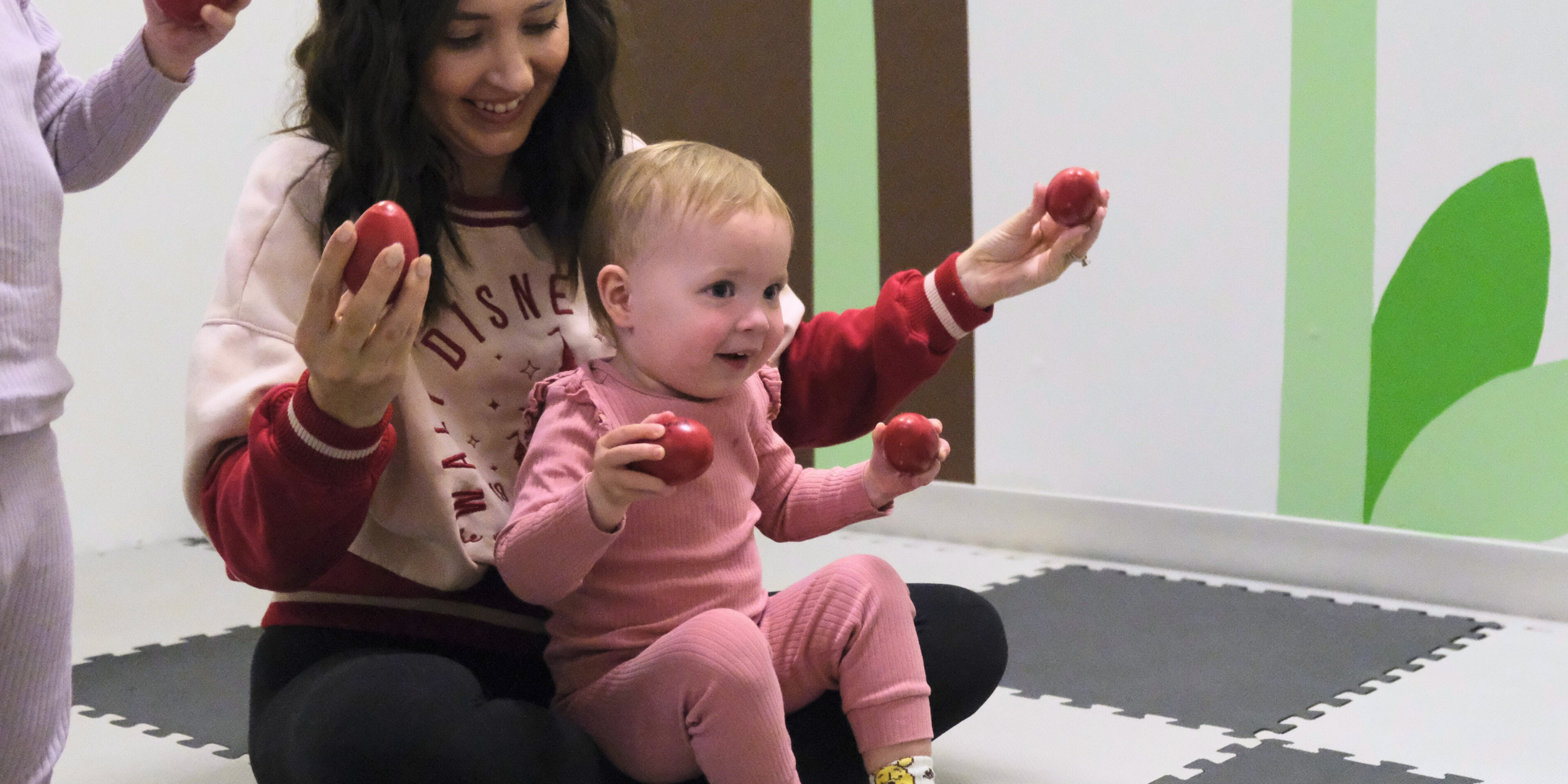
We know how busy young families can often be these days. So we like to keep things quick, simple, and fun, both in and out of the classroom.
Research shows that music boosts attention, language, and motor skills. Plus, play-based music activities build creativity, expression, and confidence. So try these bite-sized ideas at home — based on our group classes curriculum for elementary and school-aged children!
Play-based Activities for Ages 0–5
Five to ten minutes of these activities can help your child develop a steady beat, improve coordination, and even nurture their self-regulation skills!
Play with music helps build receptive and expressive language skills, as well as imagination and social skills. Plus, these little moments also encourage parent-child bonding.
Keep these activities joyful and short, so you both feel successful!

1. Lap-bouncing Babies
This cozy activity helps babies and toddlers build rhythm, motor control, and tempo awareness, while feeling connected with you.
Sit your child on your lap, and listen along to a song or a show with music.
Bounce your baby gently on your lap to the rhythm of the music.
Try alternating slow and fast during the song.
2. Shake-Shake-Shakers 🥁
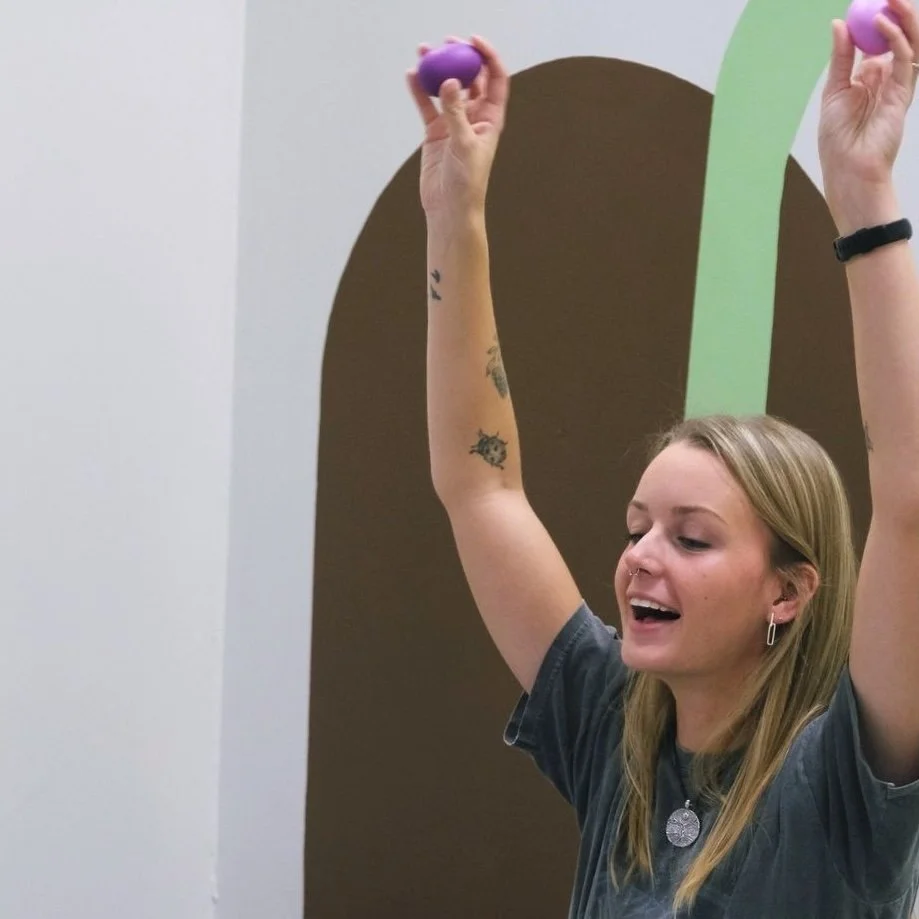
This game has a lot of benefits for toddlers and pre-schoolers, including awareness of beat and rhythm, and early language skills (many benefits that the NAMM foundation promotes as part of learning music).
Use toys at home that make a sound when shaken or rattled.
Explore different movements and rhythms while listening to a song: high, low, fast, and slow.
Tap the floor or roll the shakers gently.
Ask them to copy you while you play along with a favourite track.
3. Commotion sounds
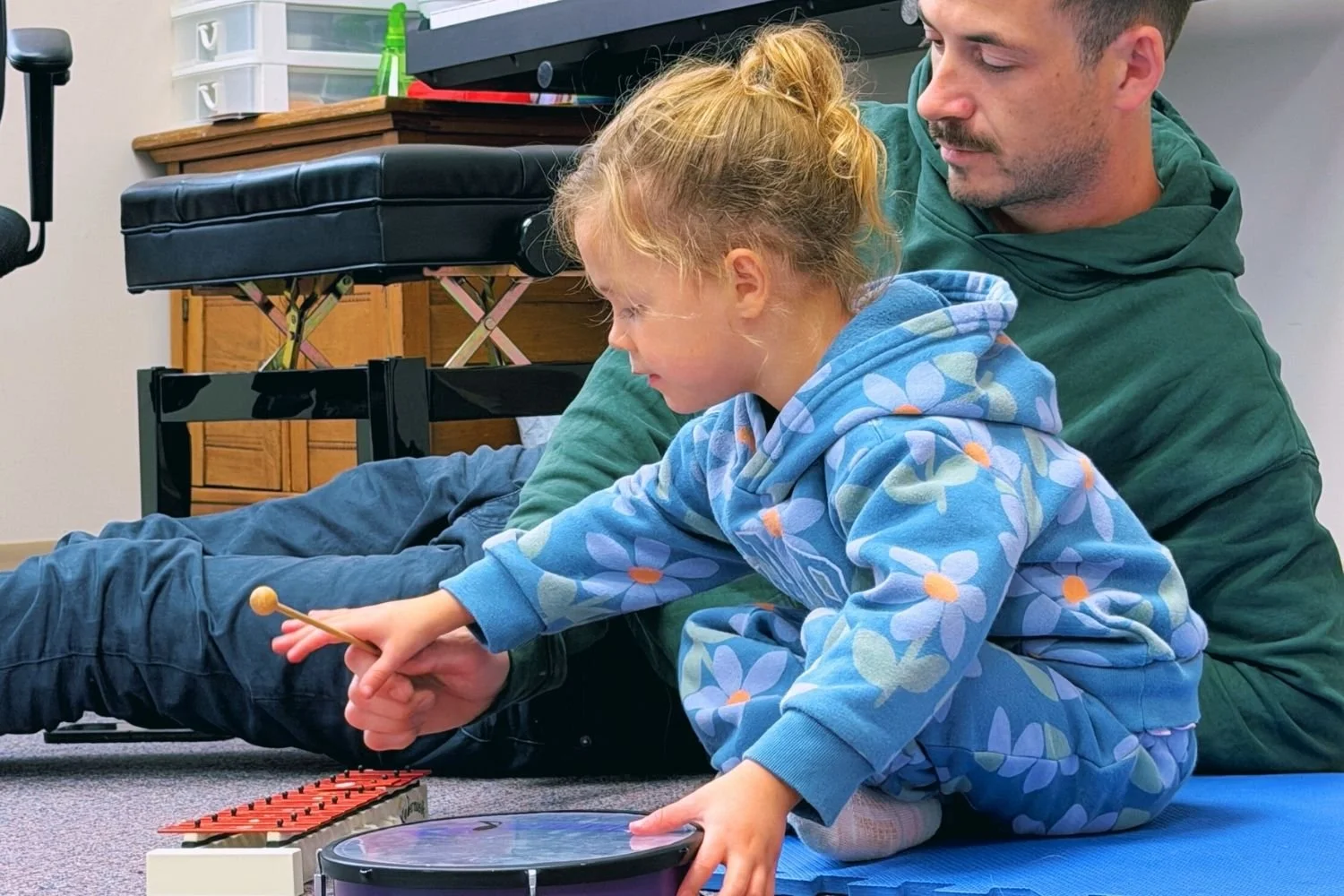
Toddlers and pre-schoolers get to explore new sounds while developing auditory skills, new vocabulary, and self-expression.
Tap different parts of a toy xylophone, tambourine, or other safe sound maker at home.
As you interact with the toy, ask your child if two different things sound the same or different.
Describe the sound together, encouraging them to find their own words to “label” how it feels and sounds.
4. Dance with toys
As soon as your little one is old enough to stand on their own, this activity supports physical coordination, listening skills, and an understanding of musical concepts through movement!
Play music with a catchy tune and clear beat.
Use hoops or stuffed toys while dancing.
Move in simple patterns together: fast and slow, smooth and bouncy, or long and short.
Games and Practice Ideas for Ages 6–10
As children get older, we want to support what they’re learning in school music classes, extracurriculars, or lessons with playful practice.
With less than ten minutes of play, we can support your child’s development of their vocabulary, timing, and confidence! Plus, research has shown that learning music improves recall and comprehension in other areas of study, too.
These practice ideas for young beginner musicians are fast, fun, and easy to do at home.

5. Draw the Instrument
Help your child build their knowledge of part names, as well as improve their fine motor skills and focus.
Set a 5 minute timer.
Draw the instrument: piano, ukulele, drums, or other instruments.
Ask them to label and show you the parts.
Have them tell you about one favourite sound or feature.
6. Airplane Play-along
This activity supports pitch and dynamic awareness, quick listening, and the further development of receptive and expressive language.
This can be played along with a simple song, or without backing music.
Call out instructions: high or low, loud or soft, etc.
They play or sing to match.
Switch roles so they lead, too!
7. Simon Says
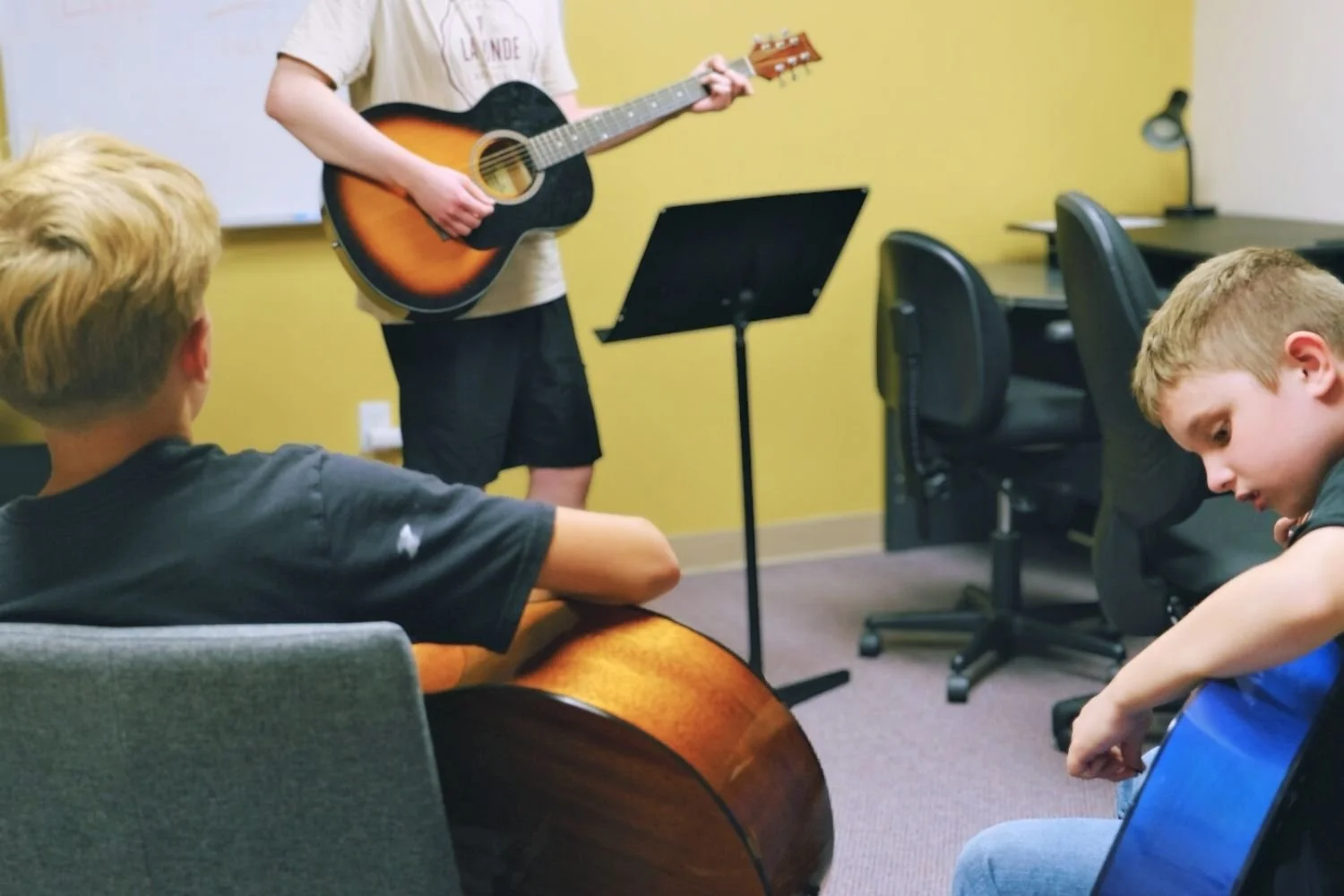
This easy game refreshes your child’s memory in between lessons or other structured learning, while building recall of notes, chords, and techniques.
Examples:
Simon says play Middle C.
Simon says play E minor.
Simon says play the hi hat.
Mix in a few no Simon tricks for laughs.
8. Make-your-own Rhythm
Time to get creative! Your child can use notes, vocabulary, and other skills they may be learning at school or in music lessons. These kinds of practice ideas are shown to support further development of rhythmic timing, communication skills, and self-expression.
Make a 1 bar rhythm by dancing, clapping, tapping or on an instrument toy.
Loop it, add a twist and take turns.
Record it and name it together.
Bonus Activity for Everyone!
Music can help relax any member of your family and calm their nervous system. We often use these in our children’s music programs at the end of the class!
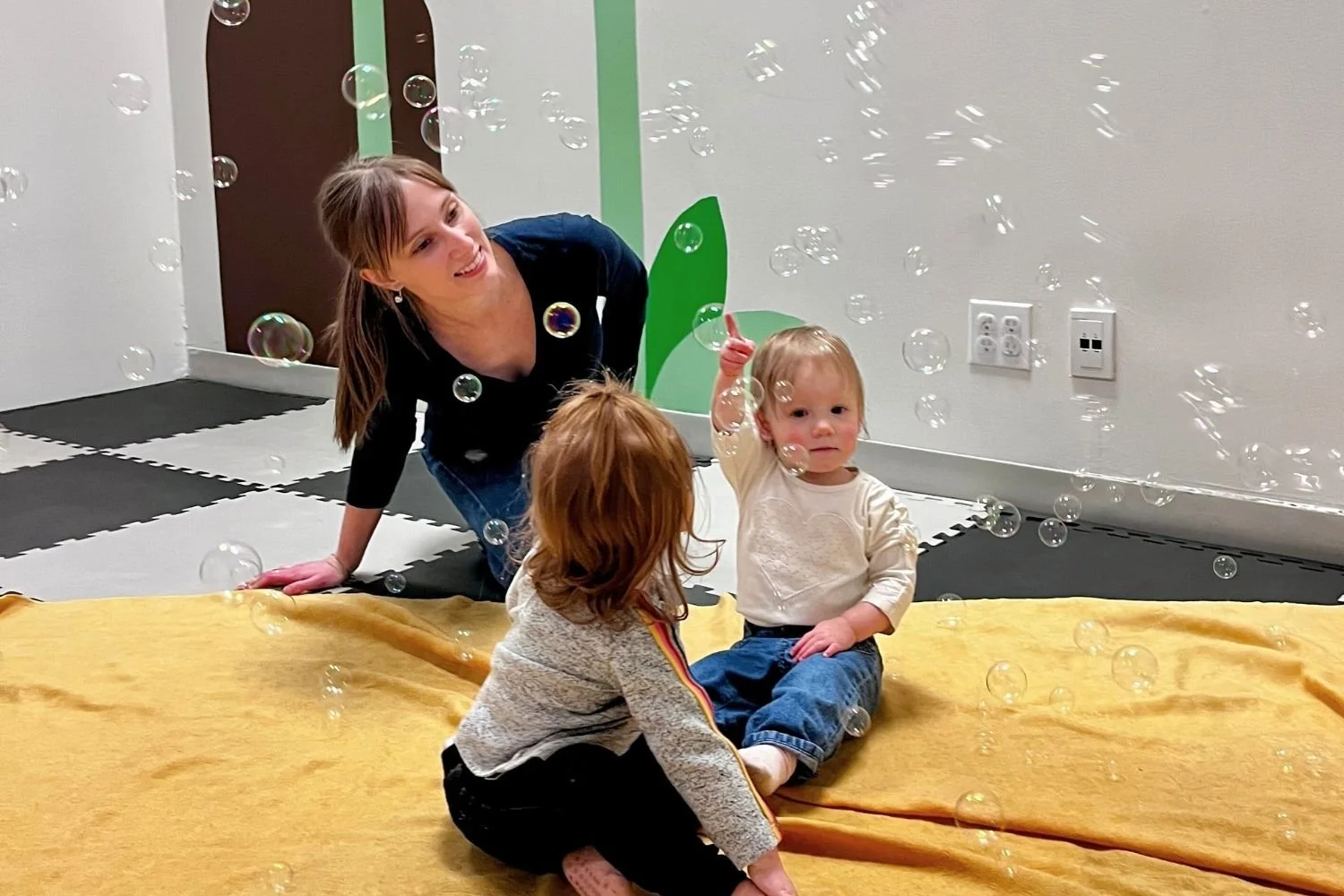
9. Calm Music
This activity makes a great reset after play, or before bed or homework.
Pick a gentle track and dim the lights.
With little ones, you can sway or cuddle to the music.
With older kids, you can count slow breaths to the beat.
Or, get out some bubbles to play with while listening!
Take the Creativity even further with Kids Group Music Classes in Waterloo Region
You only need a little bit of extra time to encourage creativity and confidence at home. Try out these musical games and practice ideas any time!
Keep in mind, these activities work best when they complement expert-led music education.
If you’re looking for play-based learning, hands-on support, and the chance to socialize through music — then our children’s music programs in Cambridge and Ayr could be the perfect fit for your family ✨ Explore our programs below:
We can’t wait to welcome you!